Mastering Online Payment Processing: A Detailed Guide
Mastering Online Payment Processing: A Detailed Guide
Online payment processing is a cornerstone of modern commerce, enabling businesses of all sizes to accept payments over the internet. As digital transactions continue to grow exponentially, understanding the intricacies of online payment processing has become crucial for developers, business owners, and fintech professionals.
Why Online Payment Processing Matters
The global shift towards digital payments is driven by the need for convenience, speed, and security. According to Statista, the digital payments market is expected to reach $6.7 trillion by 2023. This growth is fueled by the increasing number of internet users, smartphone penetration, and innovations in financial technology.
For businesses, efficient payment processing can enhance customer experience, increase sales, and expand market reach. For developers, the challenge lies in integrating seamless, secure, and scalable payment solutions into platforms.
Key Components of Online Payment Processing
Payment Gateways
A payment gateway acts as an intermediary between a merchant's website and the financial institutions involved in the transaction. It encrypts sensitive information like credit card numbers, ensuring data security.
Payment Processors
Payment processors handle the technical aspects of processing transactions, communicating with issuing banks and credit card networks to authorize and settle payments.
Merchant Accounts
A merchant account is a type of bank account that allows businesses to accept payments, usually set up through a payment processor.
How Online Payments Work: A Step-by-Step Guide
- Customer Initiates Payment: The customer selects a product or service and proceeds to checkout.
- Payment Information Submission: The customer enters payment details, such as credit card information.
- Authorization Request: The payment gateway sends the transaction details to the payment processor, which communicates with the issuing bank for authorization.
- Payment Authorization: The issuing bank checks for sufficient funds and potential fraud, then approves or declines the transaction.
- Transaction Confirmation: The payment processor relays the response to the gateway, which informs the merchant and customer.
- Funds Settlement: Once approved, the funds are transferred to the merchant's account, minus any processing fees.
Practical Examples and Use Cases
E-Commerce Platforms
Online stores rely heavily on robust payment processing solutions to handle large volumes of transactions securely and efficiently. For instance, an e-commerce site using GoPremium can leverage its free USD deposits and instant transfers to optimize cash flow and reduce transaction costs.
Subscription Services
Recurring billing is a common use case where payment processors manage periodic charges automatically, ensuring seamless service continuity for customers and predictable revenue for businesses.
# Example of integrating a payment gateway using Python
import requests

def process_payment(amount, currency, card_number, expiry, cvv):
    payload = {
        "amount": amount,
        "currency": currency,
        "card_number": card_number,
        "expiry": expiry,
        "cvv": cvv
    }
    response = requests.post("https://api.paymentgateway.com/charge", json=payload)
    return response.json()

# Example usage
transaction = process_payment(100, "USD", "4111111111111111", "12/24", "123")
print(transaction)
Statistics and Data Points
- Global E-Commerce Sales: Expected to surpass $7.3 trillion by 2025.
- Mobile Payments: Account for 45% of global e-commerce transactions.
- Fraud Prevention: Implementing advanced fraud detection systems can reduce chargebacks by up to 50%.
GoPremium: Simplifying Payment Processing
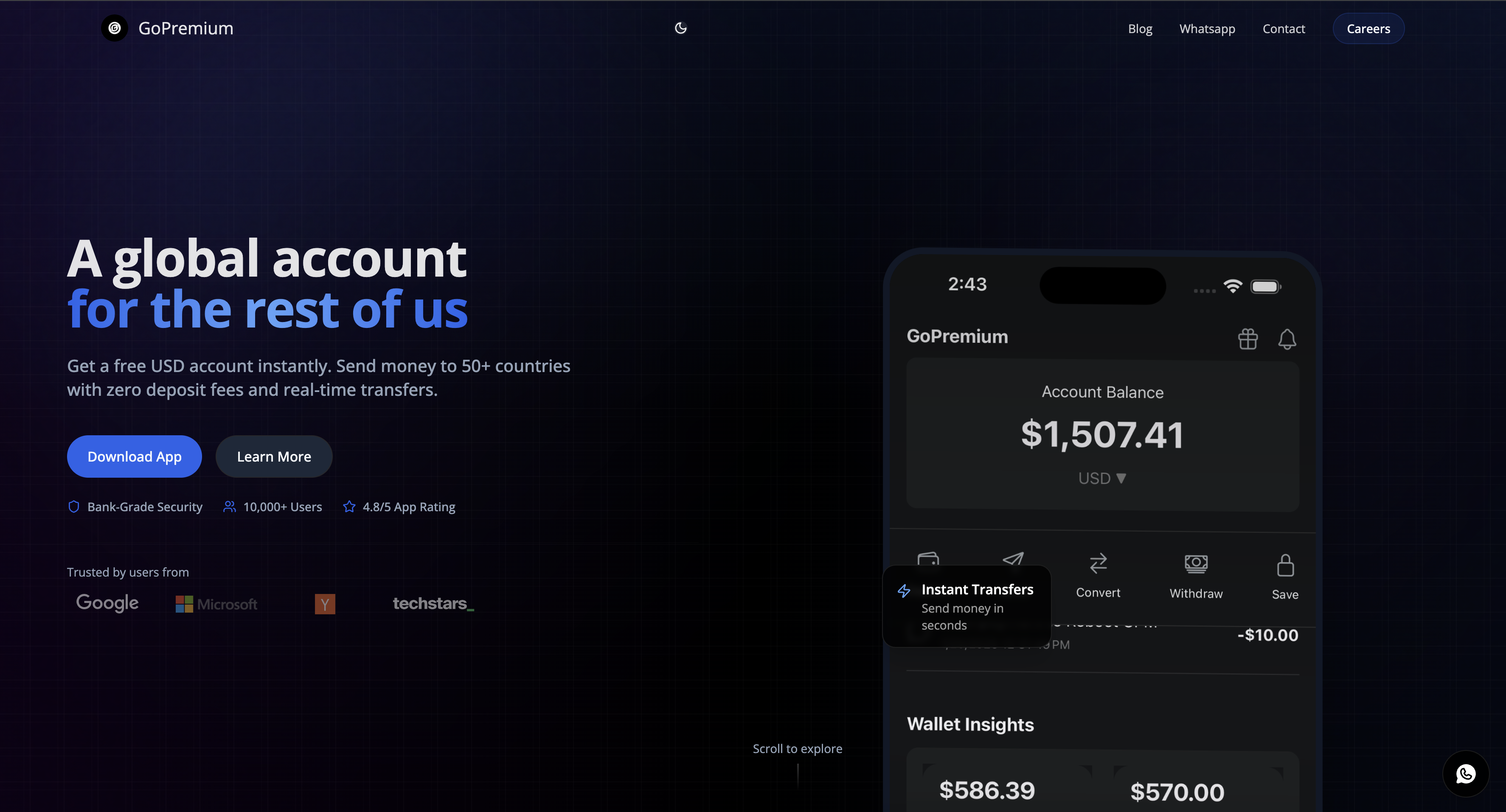
GoPremium offers a comprehensive solution for businesses looking to streamline cross-border payments. With features like free USD deposits, instant transfers, and secure debit cards, GoPremium caters to both African markets and global users. Its developer-friendly APIs make integration seamless, while maintaining compliance with MSB licensing requirements.
Actionable Insights and Recommendations
- Choose a Reliable Payment Processor: Evaluate providers based on security, fees, and support for multiple payment methods.
- Optimize for Mobile: Ensure your payment process is mobile-friendly to capture the growing number of mobile shoppers.
- Implement Security Measures: Use tokenization, encryption, and fraud detection tools to protect customer data.
- Leverage APIs: Use APIs for flexibility and scalability in payment processing, especially if you're expanding into new markets.
Conclusion
Online payment processing is an essential component of modern commerce, influencing customer satisfaction and business success. By understanding its components and leveraging solutions like GoPremium, businesses can navigate the complexities of digital payments and thrive in an increasingly cashless world.
Stay updated
Get the latest updates on product features and fintech insights.